
Feb 2nd 2026
Hose vs. Tubing: What's the Difference?
It's one of the most common questions we get: "What's the difference between hose and tubing?" If you've ever called looking for tubing when you actually needed hose (or vice versa), you're not alone. While they might look similar at first glance, there are some key differences that affect which one you need for your application.
The Main Difference: Reinforcement
The biggest distinction between hose and tubing comes down to reinforcement.
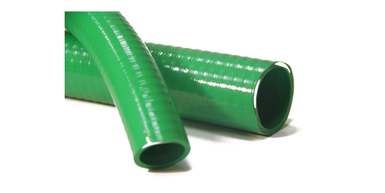
Hose is reinforced with some type of material—typically a braid, spiral, or corrugation. You'll see this reinforcement layer running through the wall of the hose, giving it extra strength and pressure resistance.
Tubing, on the other hand, is not reinforced. It's simply extruded as a single material, which generally makes it more flexible (though not always).
Types of Hose We Stock
We carry several varieties of reinforced hose for different applications:
- PVC NSF-61 Pure Water Hose – Clear hose certified for potable water applications
- No-Kink Corrugated Hose – Features a spiral reinforcement that prevents kinking and collapsing, perfect when you need a hose that won't crimp during use
- Rubber General Purpose Hose – Ideal for air or non-potable water applications
- Suction Hose – Available in both rubber (with braid reinforcement) and PVC (with corrugated spiral). These no-kink hoses are designed specifically to resist vacuum collapse
Browse our complete section of reinforced hose.
Types of Tubing We Stock
Our tubing selection includes:
- PVC Tubing – Available in different durometers, certifications, and flexibilities depending on your use case
- LLDPE (Polyethylene) Tubing – Commonly used in small spraying applications and water treatment installations
- Nylon Tubing – Durable option for various industrial applications
- Urethane Tubing – Flexible and abrasion-resistant
- Fuel Line Tubing – And other specialty options
View our full range of tubing products.
Sizing: I.D. vs. O.D.
Here's where things get a bit technical, but it's important to know when ordering:
Hose and PVC Tubing are nominally sized by their inner diameter (I.D.). When you ask for a half-inch hose or half-inch PVC tubing, you're referring to the inside diameter. This matters because these products typically use barb fittings that insert inside the hose or tube.
Polyethylene and Nylon Tubing are sized by their outer diameter (O.D.). So a 3/8" nylon tube has a 3/8" outside diameter. The reason? These tubings work with push-connect fittings that seal around the outside of the tube.
Fitting Compatibility
The sizing differences directly relate to which fittings you'll use:
Barb Fittings work with I.D.-sized products (hose and PVC tubing). We stock barb fittings in plastic, stainless steel, and brass materials depending on your application requirements.
Push-Connect Fittings like John Guest fittings are designed for O.D.-sized tubing (polyethylene and nylon). These create a seal with an O-ring around the outside diameter of the tube—no clamps needed.
Need Help Choosing?
Still not sure whether you need hose or tubing for your application? Our team can help you select the right product and fittings for your specific needs. We stock a full range of both reinforced hose and non-reinforced tubing options.
Browse our complete selection of hose and tubing products, or contact our sales team with any questions.