
Jul 14th 2026
Types of Check Valves
Types of Check Valves: Push-to-Connect, Barbed, Polypropylene, and PVC Options
Check valves all start with the same basic purpose: they allow fluid to flow in one direction and help prevent it from flowing back the other way.
That one-way flow matters in real systems. A check valve can help keep pumps primed, keep fluid in the line, and reduce delays when an application starts or cycles. Specialty Sales sees most this often in car wash systems and chemical feed applications, where losing prime can slow the next run.
The general concept is simple. The selection process is where the details matter.
There are many valves and check valve styles on the market, including spring checks, swing checks, poppet checks, and other internal mechanisms. Beyond the internal design, check valves also vary by body material, connection style, cracking pressure, spring material, and the type of tubing or pipe they are built to connect with.
Push-to-connect check valves
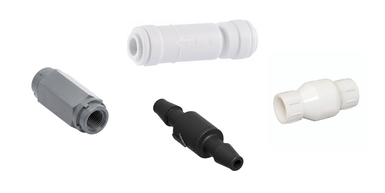
One common option is a push-to-connect check valve, such as the John Guest check valves shown in the video.
This style is typically used with polyethylene tubing, and it can also work with nylon tubing. The push-to-connect ends make it a practical option for tubing-based systems where the goal is to help keep the line full and avoid losing prime. Specialty Sales also stocks other John Guest push-connect valves for tubing systems.
Applications can include chemical feed tanks, chemical feed lines, and other systems where fluid draining back through the line would create a delay or startup problem.
Barbed check valves
Barbed check valves are another common option. These are typically used with PVC tubing, though other softer ID-sized tubing may also work depending on the setup.
A barbed check valve has a barb on each end so it can connect into flexible tubing. That makes it a fit for systems built around tubing rather than threaded pipe or rigid PVC pipe. Examples include miniature hose-barb styles such as Series 695 hose barb check valves and configurable plastic styles such as Series 426 hose barb x male check valves.
Some check valve families are also highly configurable. Depending on the valve and application, available end options may include:
- Push-to-connect ends
- Threaded male or female ends
- Barb ends
- Stub-out ends
Those choices are not cosmetic. They determine how the valve fits into the system and whether it matches the tubing, pipe, or fittings already being used.
Cracking pressure and spring material
Connection style is only one part of the selection.
Some check valves can also be configured with different cracking pressures. Cracking pressure is the pressure needed to open the valve and allow fluid to flow through it.
Spring material may also matter, especially in chemical applications. Specialty Sales offers options up to Hastelloy springs for chemical resistance, depending on the valve configuration and application.
Polypropylene check valves
Polypropylene check valves give buyers another body-material option.
The polypropylene example shown in the video has female/female threaded ends, allowing it to thread into compatible pipe or fittings. Specialty Sales also offers other end styles in polypropylene check valves, including male ends and push-to-connect ends. For example, the Series 426 plastic check valve family includes female/female, male/male, male/female, female/male, push-connect, and hose-barb configurations.
As with the other styles, the right choice depends on the application, connection type, and fluid moving through the system.
Schedule 40 PVC check valves
For larger PVC piping systems, PVC spring check valves are another common option.
These valves are meant to be plumbed into PVC lines. The example shown in the video has threaded ends, but Specialty Sales also stocks threaded PVC spring check valves and solvent-connection PVC spring check valves for systems using glued PVC pipe.
Schedule 40 PVC check valves are available in different diameter sizes and different cracking pressures, depending on what the system requires.
Choosing the right check valve
Most check valves perform the same basic job, but they are not all interchangeable.
Before choosing a check valve, consider:
- The tubing or pipe being used
- The connection style required
- The valve body material
- The fluid moving through the system
- The cracking pressure needed
- The spring material, when applicable
- Whether the system needs help maintaining prime or keeping fluid in the line
A push-to-connect check valve may be right for a polyethylene tubing system. A barbed check valve may be the better fit for flexible PVC tubing. A polypropylene or Schedule 40 PVC check valve may make more sense in a threaded or PVC-piped system.
If you have questions about any of the check valves shown in the video, or any of the other check valves Specialty Sales stocks, contact our sales team. We can help you find the right valve for your application.